
Roof repair or replacement? Learn how roof condition, the extent of damage and surrounding materials help determine a practical scope of work.

A leak does not automatically mean you need a new roof. A repair may be appropriate when the problem is limited and the surrounding roofing remains serviceable. Replacement deserves a closer look when deterioration is widespread, several parts of the roof need work or repeated repairs no longer address the underlying condition.
The useful question is what needs to be repaired and why. Roof age, leak history, the visible covering and the condition of the layers underneath all belong in that conversation. Below are examples from our completed work in San Antonio, Georgetown and Floresville, followed by questions you can use when reviewing an estimate.
Start with the problem you can describe
Tell us where water appears, when you first noticed it and whether the same area has been repaired before. Include photographs from the ground or inside the building if you have them. A ceiling stain is useful information, but it does not by itself identify which roof detail needs work.
GAF’s homeowner guidance identifies several possible contributors to a leak, including damaged shingles, underlayment and flashing. Its repair-versus-replacement guidance distinguishes small, localized damage from broader roof problems. Those distinctions are a starting point for inspection, not a diagnosis of a particular property.
What a focused repair can include
In our San Antonio shingle-repair project, the documented work included localized shingle repairs, vents and roof-to-wall details. Six photographs show the repaired shingles, roof jacks, a hooded vent and kick-out flashing beside a gutter. The work record also describes decking repairs; the finished photographs do not show every concealed layer.
Our Georgetown tile-repair project gives a different view. Seven photographs include opened tile around a chimney, exposed valley metal and tile courses after reinstatement. The gallery makes it possible to see the area being worked on rather than judging the job only from a distant finished-roof photograph.
These cases show two actual repair scopes. They do not establish that a similar-looking problem on another house has the same cause. The surrounding material, access and condition beneath the visible roof still need to be assessed.
What changes when replacement is needed
Our Floresville replacement case follows a larger scope. Its six-photo sequence includes the earlier roof, exposed damaged decking, a deck patch at a pipe, valley underlayment and the finished shingle roof. This is useful context when comparing a new roof covering with the work that may also be needed underneath it.
A replacement estimate should identify the roof areas included, the chosen material and the treatment of edges, valleys, vents, walls and other openings. It should also explain how damaged decking discovered during removal will be documented and priced. A clean finished view is one part of the record; the preparation and roof details matter too.
Compare the scope before comparing the total
Ask each contractor to explain the following in writing:
The affected area: which slope, roof junction, opening or gutter-adjacent detail is being addressed?
The proposed work: what will be removed, repaired or replaced, and what will remain?
The surrounding condition: why is a local repair reasonable, or why is broader work recommended?
Concealed damage: what happens if opening the roof reveals damaged decking or another condition outside the initial scope?
Completion and coverage: what photographs, cleanup, final checks and written warranty terms are included?
A short repair description and a complete replacement proposal are different scopes. Reviewing those details together helps you understand what each total pays for and which questions remain unanswered.
Use roof age as context
Find any installation records, earlier estimates or inspection reports you already have. GAF notes that an older roof in good condition may still be a repair candidate. Age alone does not establish that the roof has failed, just as a newer installation does not rule out a problem at a particular detail.
Share your plans for the property as well. If you are considering a material change, a sale or other exterior work, we can discuss how that affects the scope you want us to evaluate. We explain the observed condition and proposed work so you can make an informed decision.
Arrange an inspection in Central Texas
Barnes N’ Roofs serves residential and commercial properties across Central Texas, with a New Braunfels base and work in the San Antonio and Austin markets. Start with roof repair, roof replacement or roof inspections, or request an assessment of your roof.
Sources and project evidence
A quick decision framework
| Observed situation | What to assess |
|---|---|
| One localized problem | Whether the cause can be corrected and nearby material remains repairable. |
| Recurring leak in the same area | Whether earlier work addressed the source, surrounding details and concealed conditions. |
| Widespread deterioration | Whether multiple roof areas and components require a coordinated replacement scope. |
| Limited records or uncertain age | Observed condition and missing evidence, rather than an assumed expiration date. |
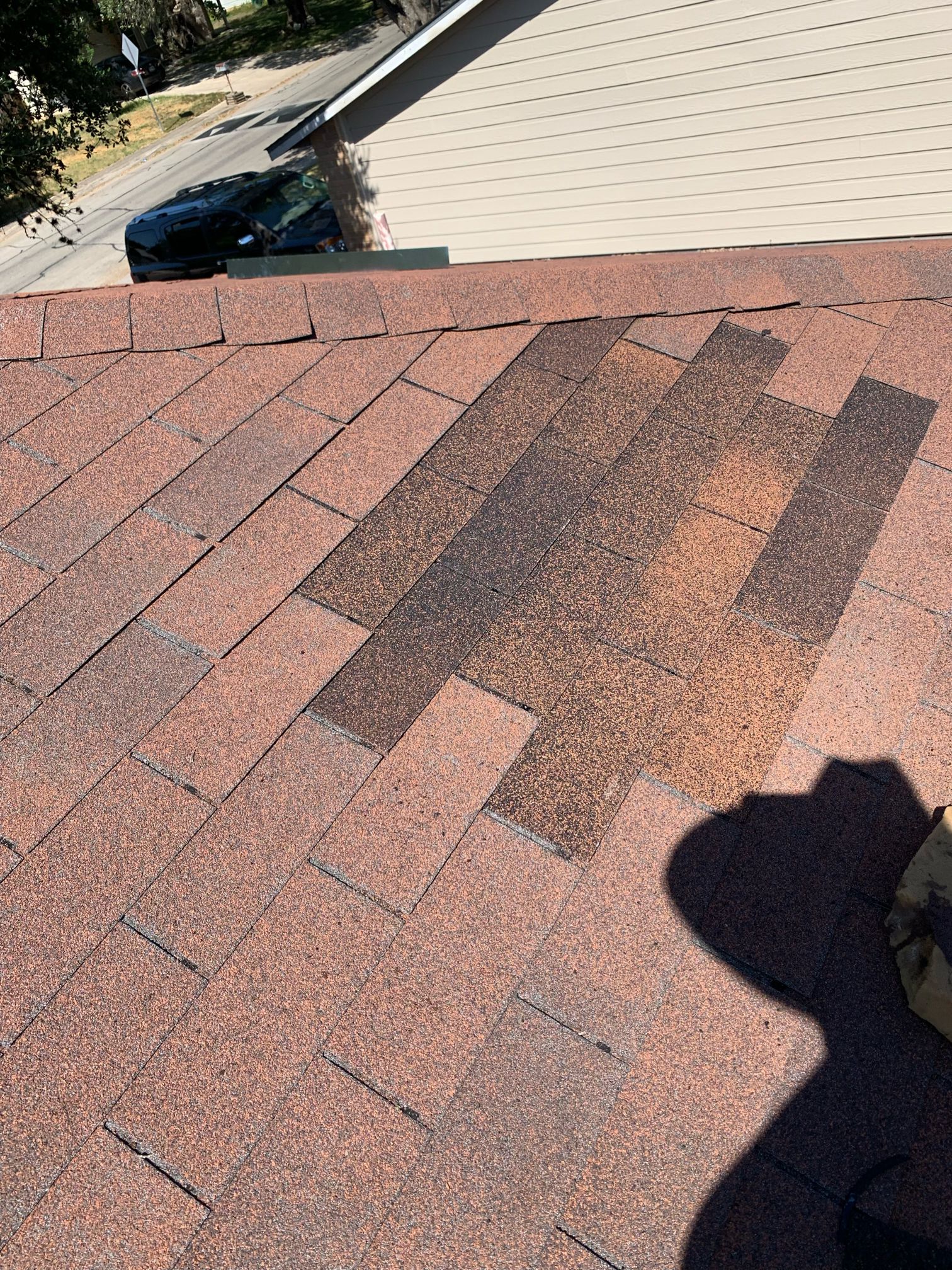
A documented local repair illustrates a limited scope. The suitability of a repair depends on the inspected roof, not the similarity of a photograph.
See the San Antonio repair gallery
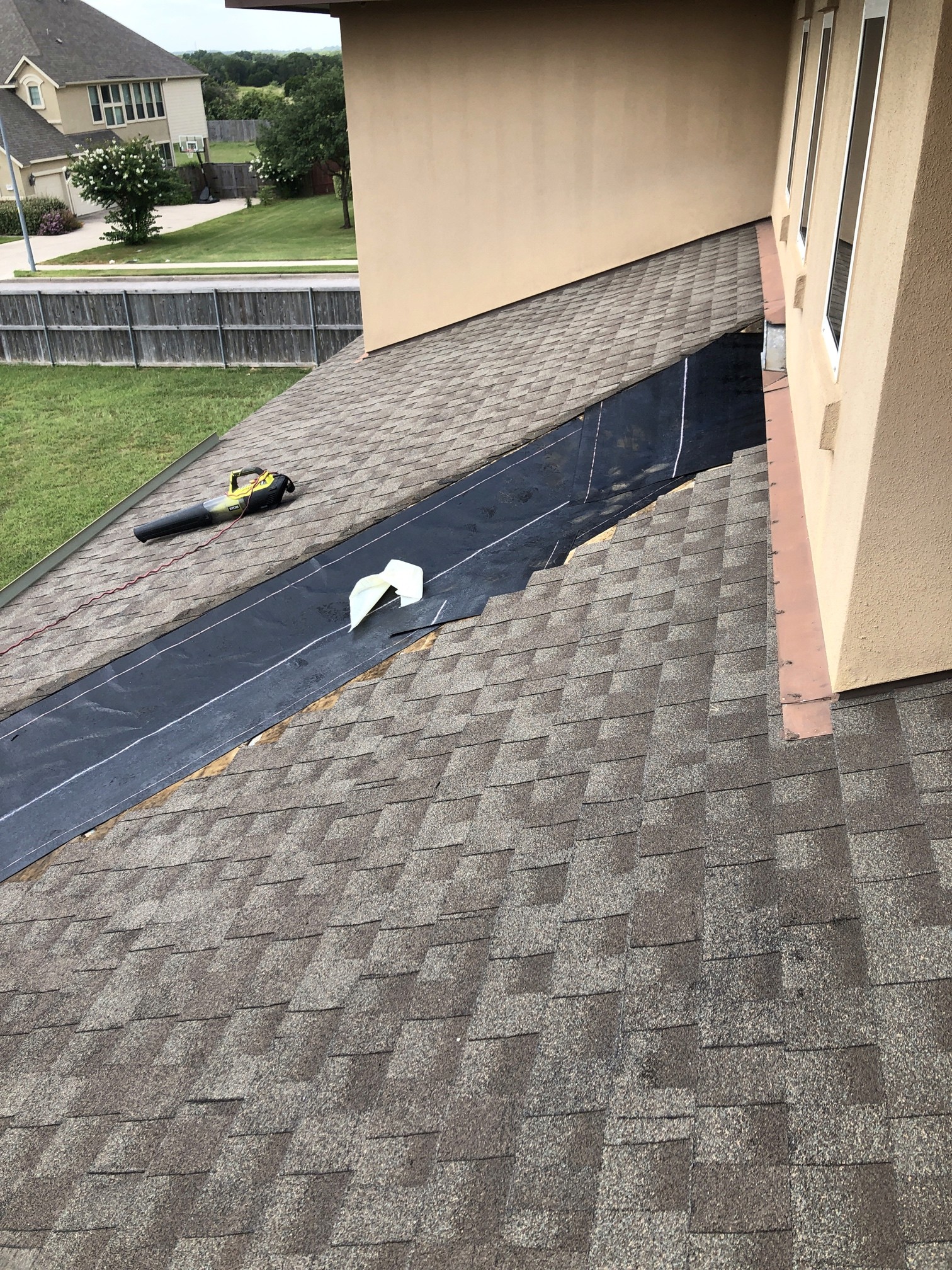
Roof-to-wall flashing detail. Isolated junction problems and widespread roof wear require different repair decisions.
Published by Barnes N’ Roofs. Manufacturer guidance checked September 7, 2026. The linked project pages document Barnes’ work; the general manufacturer references help explain the assessment principles.
Visual guide additions reviewed September 18, 2026.