
Compare installed roof prices for shingles, 24-gauge standing seam, 26-gauge exposed-fastener metal, TPO and modified bitumen. See what is included and what costs extra.

Plan your roof replacement with Barnes N’ Roofs installed-price ranges for Central Texas. Compare shingles, metal and low-slope systems below, then request a written quote for your roof.
Prices updated September 18, 2026. One roofing square equals 100 square feet of actual roof surface. Roof area is not the same as the home’s floor area. These are planning ranges, not a binding quote.
Roof replacement prices
| Roof system | Installed price per square | Example: 20 squares |
|---|---|---|
| Three-tab shingles | $350–$395 | $7,000–$7,900 |
| Architectural shingles, including Class 3 | $375–$450 | $7,500–$9,000 |
| Class 4 shingles | $450–$475 | $9,000–$9,500 |
| Standing seam metal · 24-gauge | $700–$900 | $14,000–$18,000 |
| Exposed-fastener metal · 26-gauge | $600–$700 | $12,000–$14,000 |
| TPO · 60-mil with R-25 insulation | $900–$1,500 | $18,000–$30,000 |
| Modified bitumen | $450–$650 | $9,000–$13,000 |
The example uses 20 roofing squares, or 2,000 square feet of roof surface, multiplied by the per-square range. It is not a quote for a 2,000-square-foot house. Additional charges below are not included in the example totals. Roof slope and the specified system must be suitable for the building.
What is included, and what costs extra?
| Included in these ranges | Additional charges |
|---|---|
| Labor and roofing materials | Decking replacement |
| Standard tear-off and disposal | Extra tear-off layers |
| Underlayment, standard flashing and ventilation appropriate to the system | Steep slopes and difficult access |
| R-25 insulation with the listed 60-mil TPO system | Other changes to the quoted scope |
Your formal quote identifies the roof area, selected products and scope. We discuss additional work before proceeding. Request a quote for your roof rather than treating a photographed project as a priced estimate.
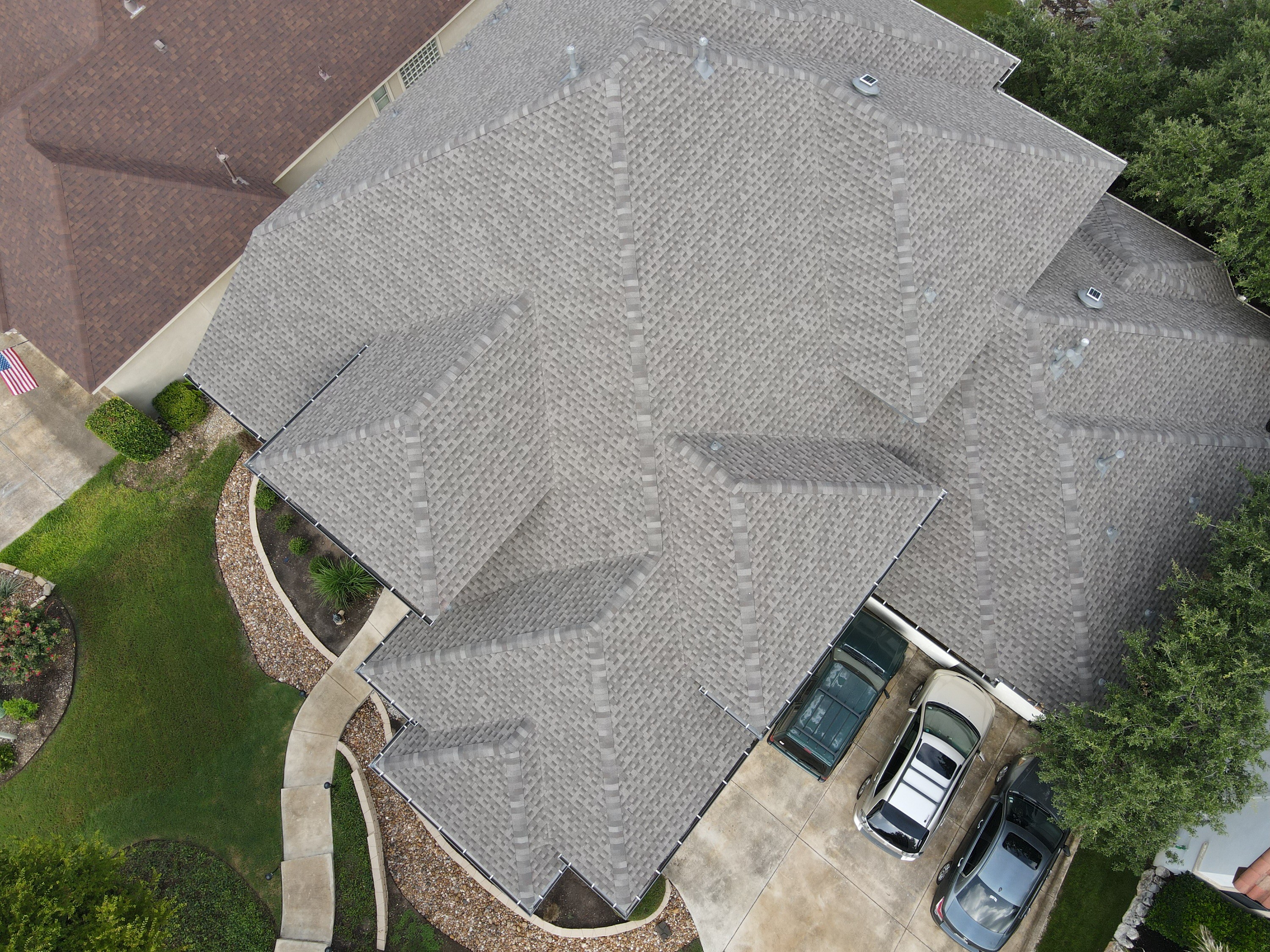
Drone view of a roof with several hips and valleys. Measure the actual roof and complexity before comparing replacement prices.
Identify every roof area
Ask the estimate to show which parts of the building are included: the main roof, porch, garage, additions and any separate low-slope areas. Confirm whether the proposal covers the whole roof or selected sections.
Our Pewter Grey shingle project in Austin shows the front porch gable and the long hip roof behind it. Four finished views give a better sense of the layout than a single front photograph. Use the same approach when explaining which areas of your own roof you want evaluated.
Understand removal and decking work
The proposal should say what existing roofing will be removed and how the underlying deck will be evaluated. Ask what is included for visible damage, what remains uncertain before opening the roof and how additional work will be documented and approved.
Our Floresville replacement case has a six-photo sequence that includes the earlier roof, damaged decking, a deck patch at a pipe, valley underlayment and finished shingles. The opened-roof photographs explain a part of the scope that disappears beneath the finished covering.
When a proposal contains an allowance or unit price for decking, ask what material, thickness and unit it covers. Also ask whether removal, installation and disposal are included in that amount. Keep those answers with the estimate so the process is clear if additional damage is found.
Compare the complete material selection
Have the roof covering identified by product, along with the related underlayment, starter, ridge treatment, ventilation and flashing work included in the proposal. If you are comparing shingles with standing seam, request a clear description of each alternative.
Our Austin recessed-entry project shows a change from shingles to standing seam. It provides a visual comparison of the materials on the same home. For planning purposes, the written specifications still matter: a metal-roof option needs its own panel, attachment, finish and detail scope.
Include the roof intersections
Review how the estimate addresses valleys, edges, walls, chimneys, vents and other roof openings. Ask which existing items will be replaced, which will remain and whether related work is outside the roofing contract.
Mark any roof opening that has leaked before. Share past repair records and interior photographs where available. The contractor should be able to connect a recommendation to the area being discussed rather than relying on a single general description.
Discuss the work at ground level
Tell us about access restrictions, vehicles, landscaping, tenants and areas that must stay in use. Ask where materials and debris will be handled, how cleanup is described and what the completion review includes. For an occupied commercial property, include the person coordinating access and scheduling in the conversation.
Five questions before approving the estimate
Are all intended roof areas and materials named?
What removal, deck repairs and roof details are included?
How will work discovered after removal be documented and priced?
What items, if any, are excluded from this proposal?
What completion photographs and written warranty information will I receive?
If financing is part of your planning, discuss it alongside the scope. Barnes works with Acorn Finance and Wisetack; availability, approval and terms depend on the provider and application. Ask about financing when requesting your estimate.
Get a quote for your roof
See our roof replacement service and repair-or-replace guide. We serve San Antonio, Austin and surrounding Central Texas communities from our New Braunfels base. Request a written roof estimate.
Price ranges supplied by Nicholas Barnes for Barnes N’ Roofs and updated September 18, 2026. Project photographs illustrate roof layouts and scope, not the price paid for those individual jobs.