

Compare felt, synthetic and self-adhered roof underlayment, understand roof-type compatibility and see what belongs in your estimate.

Underlayment is a layer beneath the visible roof covering. It belongs in your estimate by product name, not just as “paper.” The right selection depends on the covering, slope, deck, climate exposure and installation requirements.
Three categories you may see
| Type | Role | What to confirm |
|---|---|---|
| Asphalt felt | Traditional underlayment beneath compatible coverings | Specified weight/product, attachment and allowed exposure. |
| Synthetic | Manufactured sheet underlayment beneath compatible coverings | Exact product, fastening, slip precautions and exposure limits. |
| Self-adhered membrane | Bonded layer for specified roof areas or assemblies | Deck preparation, temperature limits, covering compatibility and required placement. |

Notice the overlapping sheets and the different edge relationships at eaves and rakes. This Owens Corning standard-slope example is product-specific; low slopes and other underlayments can require different assemblies. Source: Owens Corning, Figure 2. View original detail.
TAMKO examples, matched to the roof
TAMKO lists Synthetic Guard and Synthetic Guard Plus, asphalt felt, Moisture Guard, TW Underlayment, and TW Metal and Tile products. These are not interchangeable. In particular, TAMKO says Moisture Guard is not recommended beneath metal roofing. Confirm the exact assembly before substituting a product.
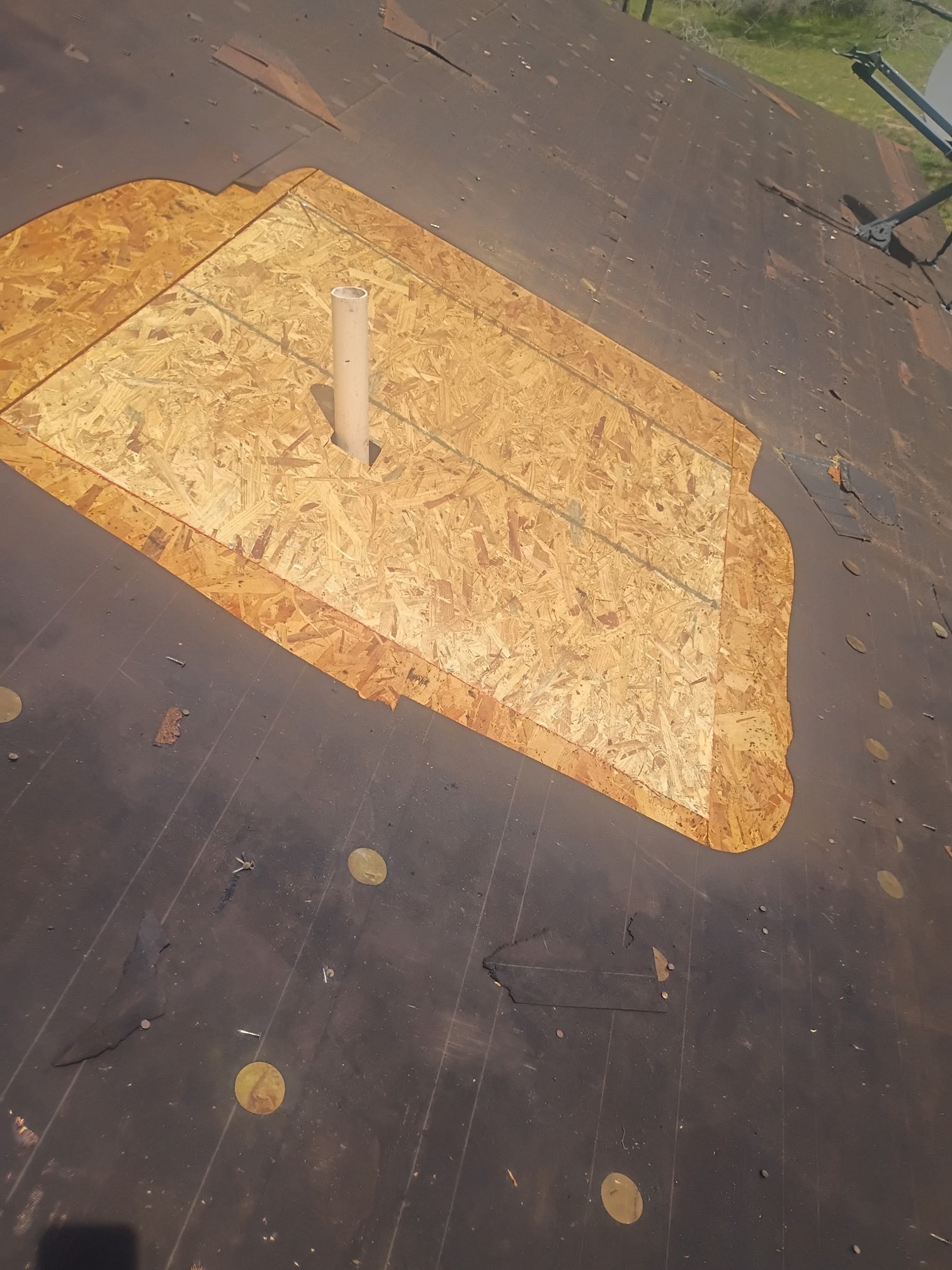
Our Floresville project documents concealed preparation work. Its visible GAF products are real project examples, not TAMKO product photos.
Five questions for the estimate
Which underlayment will cover each roof area?
Where are self-adhered barriers or additional layers specified?
How will valleys, edges and penetrations be integrated?
What happens if rain interrupts the work?
How will damaged decking be documented and approved?
Underlayment is not a substitute for the finished roof covering, flashing or a suitable deck. Product exposure limits are not a promise that an unfinished roof can be left open through any weather.
See our Floresville preparation and deck repairs
Explore the complete roofing system
Request a roof inspection or written estimate
Source: TAMKO accessories and compatibility notes
Source: Product-specific installation instructions
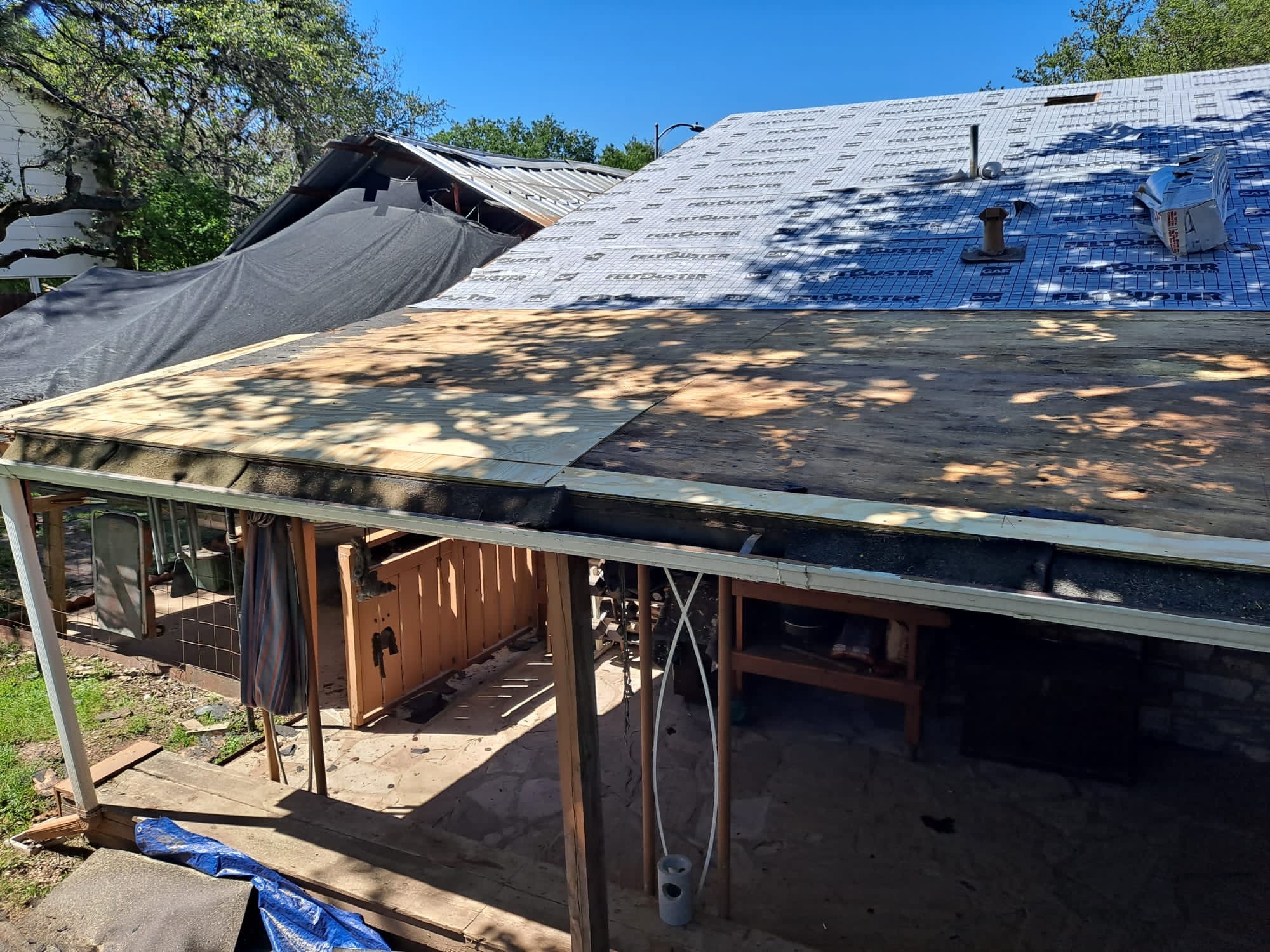
Roof deck and underlayment during installation. The visible product is an example from our work, not a recommendation for every roof.
Prepared by Barnes N’ Roofs, New Braunfels, Texas. Reviewed September 18, 2026. Product availability and written manufacturer terms control.
Owens Corning example: plan the dry-in
RhinoRoof U20 instructions call for a dry, prepared deck and distinguish fastening for same-day covering from extended exposure. Roof slope also changes the application. A roll’s advertised exposure period is not a substitute for a weather plan.
| Before work | Ask for |
|---|---|
| Deck preparation | Photos before the underlayment hides the wood. |
| Product and slope | The exact underlayment and applicable detail. |
| Weather interruption | How the unfinished roof will be protected. |
| Finished dry-in | Overview photos of the installed layer and transitions. |
RhinoRoof U20 manufacturer instructions