

See how crickets and saddles redirect water around chimneys, skylights and roof curbs, with real job photos and roof-system comparisons.

A roof cricket is a small raised section that splits runoff and sends it around an obstruction. Saddle is another common name for the same drainage feature. The shape and covering depend on the roof, slope and obstruction.
What does a cricket do?
Water flowing down a roof can collect against the uphill side of a chimney or curb. A cricket creates a high point and routes water toward either side. It works together with underlayment and flashing; it does not replace them.
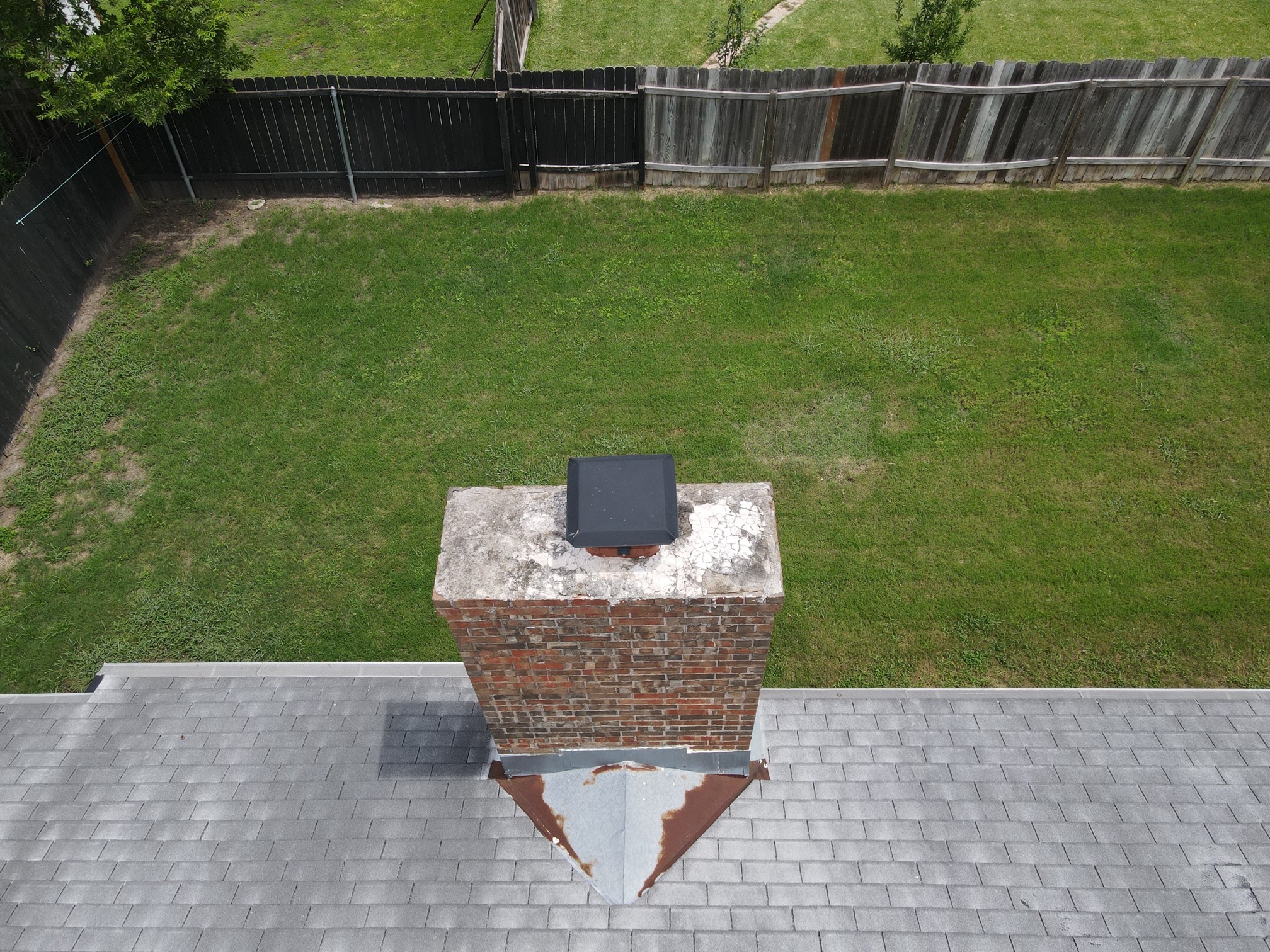
Before: weathered metal cricket and chimney flashing on the same roof shown below.

After: a metal cricket behind the brick chimney, with the surrounding green shingle roof visible.
Metal cricket or shingled saddle?
| Option | Where it can fit | Important distinction |
|---|---|---|
| Metal-covered cricket | A shaped metal diverter behind a chimney or compatible roof curb. | The entire exposed drainage surface is metal; seams and flashing need a compatible design. |
| Shingled saddle | A framed raised section on a shingle roof, where its slopes meet the shingle requirements. | The covering must suit the actual saddle slope, not just the surrounding roof pitch. |
| Membrane-covered cricket | TPO, modified-bitumen and other approved low-slope systems. | The raised shape is covered and flashed as part of the membrane assembly. |

A shingled saddle behind a sided chimney. The wider view shows both drainage slopes and the surrounding roof.
Flashing is part of the system
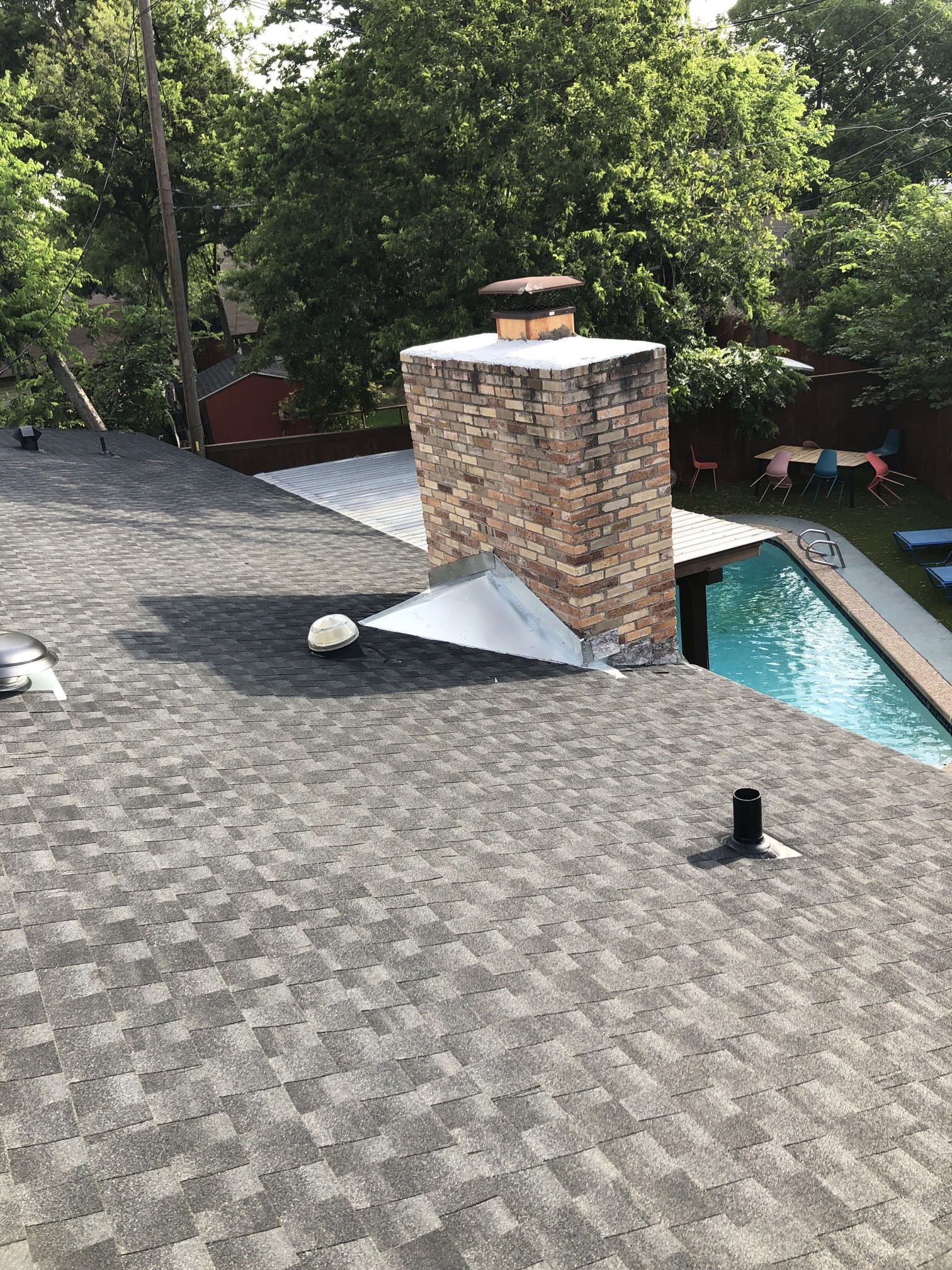
Another metal cricket behind a brick chimney on a gray shingle roof, shown in its wider roof setting.
A successful repair connects the cricket to the surrounding roof and chimney or curb. Flashing laps, corner details, side drainage paths and the condition of the existing substrate all matter. Adding sealant alone does not create the missing slope.
Behind skylights
A cricket may be appropriate on the uphill side of a skylight curb where the layout would otherwise trap runoff. Not every skylight needs an added cricket. Follow the skylight model’s flashing system, roof-pitch limits and approved details, keeping drainage and weep paths clear.
On standing-seam and other metal roofs
Metal-roof crickets and backpans must work with the panel profile, curbs and roof movement. A large penetration can interrupt several panel channels. The detail must route water around it and return it to a clear downhill path without blocking seams or creating a new pocket.
On flat roofs
Low-slope roofs still need drainage. Tapered insulation crickets can divert water around equipment curbs, skylights and other obstructions, or help route runoff between drainage points. Their surfaces are covered with the specified roof membrane. A cricket cannot correct a blocked drain or an inadequate overall drainage plan.
| Location | What we evaluate |
|---|---|
| Chimney | Width, uphill roof area, saddle pitch, flashing and sound backing. |
| Skylight | Curb, manufacturer flashing, roof pitch and drainage paths. |
| Metal roof | Panel channels, curb design, movement and compatible metals. |
| Flat roof | Taper layout, drain elevations, membrane details and clear outlets. |
Signs worth checking
Repeated leaks near the uphill side of an obstruction, trapped debris, ponding or deteriorated flashing are reasons to inspect. These symptoms do not prove a cricket is the only repair needed. Roof photos and a closer assessment help identify the cause.
What should the estimate include?
| Scope item | What should be clear |
|---|---|
| Shape and covering | Proposed cricket location, dimensions and roof material. |
| Hidden repairs | Decking, framing or chimney repairs included and any allowance. |
| Waterproofing | Underlayment, flashing and integration with the existing roof. |
| Drainage route | Where the redirected water will travel after leaving the cricket. |
Barnes N’ Roofs can assess chimney and skylight drainage and quote an appropriate cricket or saddle detail. Applicable local requirements and manufacturer instructions determine the final design.
Request a roof drainage assessment
Compare flat-roof insulation and taper
Further reading
VELUX installation and flashing resources